
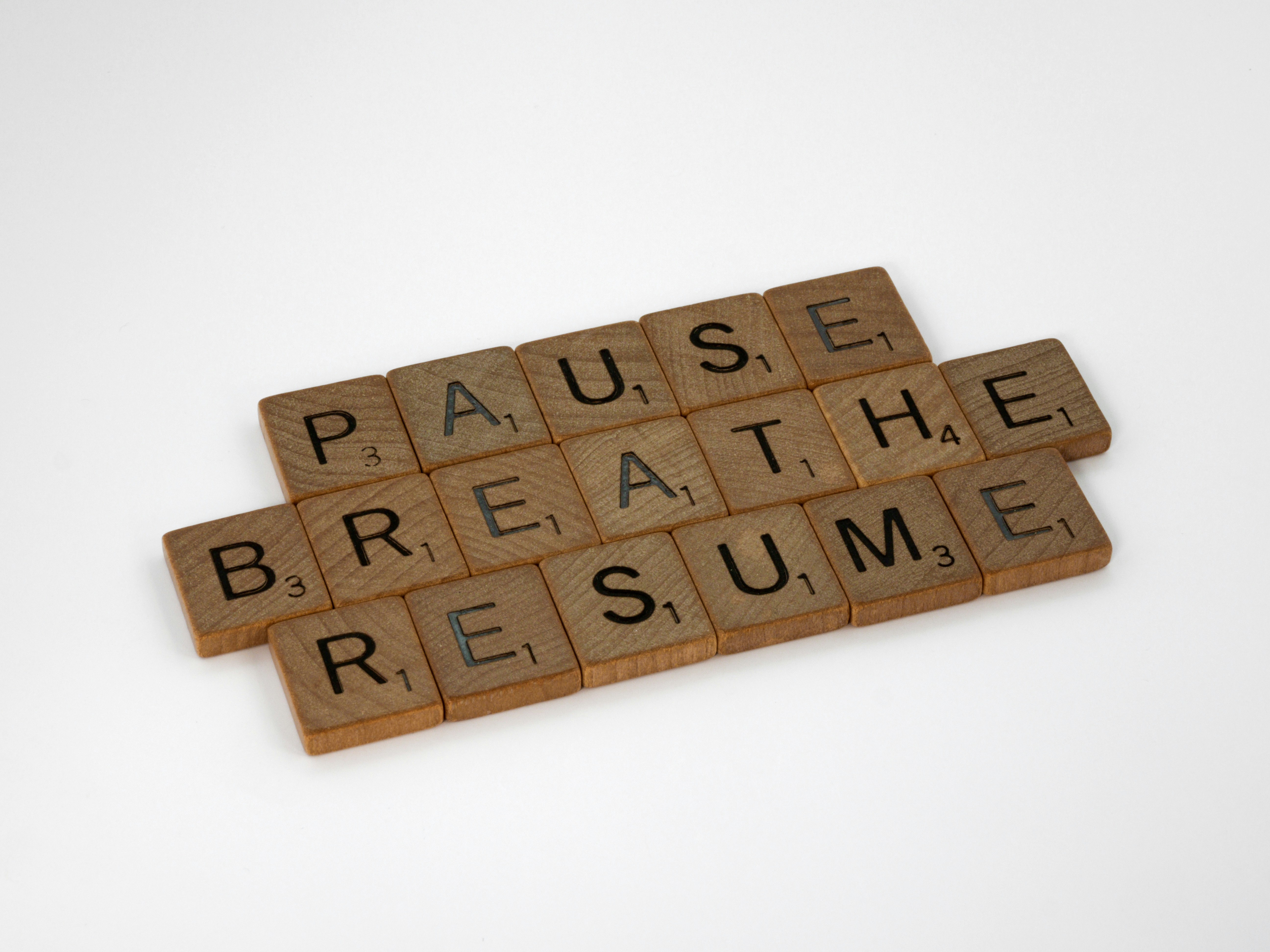
Photo credit: Brett Jordan/Unsplash
Have we forgotten how to rest?
There was a time when survival mode kept us alive, a fight-or-flight response designed to activate in the presence of danger.
In modern life, however, many people exist in a near-constant state of survival mode, often without realising it.
Waking up to notifications, moving from one demand to the next, consuming a constant stream of information, and remaining connected to work, news, and one another.
We put so much pressure on ourselves that even our downtime can feel stressful.
Evenings, weekends and holidays often become opportunities to ‘catch up’ because technology means we can.
But just because we can, doesn’t mean we should.
Have we become so accustomed to stimulation that we no longer know how to switch off? Or is it more that the weight of expectation, perceived or otherwise, is that we should always be available?
We could blame technology. Technology has given us the connectivity, the access and the capability to be available 365x24x7. But at what point do we take responsibility ourselves for how much we use it?
Boundaries may be a much-used term these days, but they can play a valuable role if we consider how easily ‘available’ becomes our default setting.
Can’t find the off switch?
So perhaps the question is not whether we have enough time to rest, but whether we still know how.
Is it that peace and quiet has become something we find uncomfortable? Or, when we do slow down, and choose to do nothing, does guilt creep in?
Periods of relaxation and taking time to reset are fundamental to our health. Without it we remain in a cycle of stress that leaves us both mentally and physically depleted and, ultimately, unproductive.
We need to change the mindset and consider optimum rest as something that’s fundamental to our health, and fuel for our success.
The cortisol effect
Stress is part of life, and that’s ok. The body is designed to cope with short-term stresses. The problem comes when there is no space between one demand and the next, and the body never quite gets the message that it is safe to switch off.
When stress becomes chronic, the body continues to produce stress hormones, such as cortisol.
In the short term, this response is protective but, over time, elevated levels can affect sleep, mood, concentration, metabolism, and cardiovascular health.
Rarely is there a single cause behind chronic illness, but it is difficult to ignore the role stress plays in many of the health conditions that are becoming increasingly common today.
When sleep doesn’t fulfil its purpose.
Cortisol should follow a natural daily rhythm: rising in the morning to help us wake and focus, then gradually declining in the evening to prepare the body for sleep.
When stress remains elevated, this rhythm is disrupted. Sleep becomes lighter, more fragmented, and waking can feel as if we haven’t slept at all.
Rest before bed, when time permits of course, gives us the chance to slow our minds. A transition that helps us organise our thoughts, process the events of the day, and let go of its demands.
Getting a good night’s sleep is often treated as the solution when stress persists, and indeed it’s a big part of it, but sleep and rest are partners, not substitutes. One doesn’t compensate for the absence of the other.
The reset button.
So today, try something simple.
Find five minutes without a phone, notifications, music, podcasts, television, or scrolling.
Five minutes of genuine peace.
Close your eyes.
Breathe.
Think, or don’t think at all.
Not because you’ve earned it, and not because everything else is finished, but because your nervous system needs it.
There is a chance those five minutes may be one of the most productive things you do all day.
Where homeopathy can help.
No form of medicine can match the benefits of proper sleep, rest and relaxation but homeopathy can support you through periods of stress. Whether it’s grief, overwhelm, nervous or anticipatory anxiety, there are remedies that can help you with processing emotions or mental strain.